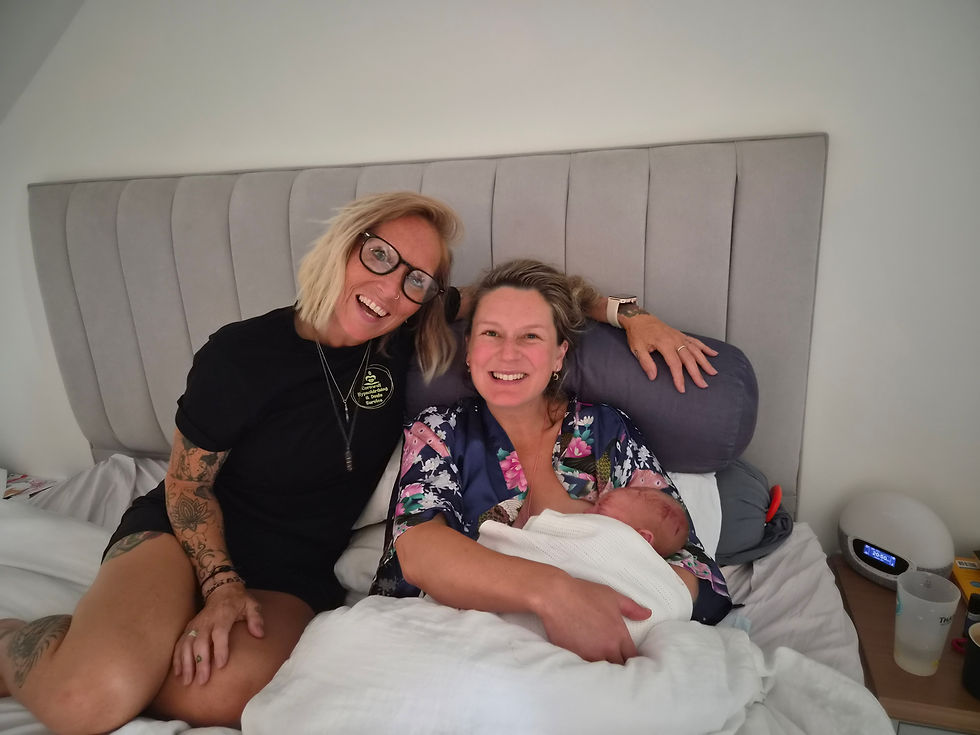
This blog is a wonderful, powerful birth story of recent Doula clients, Ellie and Chris. Ellie was planning a VBAC in pregnancy for this baby, after an elective c-section of her twins 5 years previous. Ellie outlines her journey to giving birth, which wasn't always straightforward as she was under consultant lead care (due to the previous c-section, and the fact that she went to almost 43 weeks avoiding induction) and planning on birthing 'Out of Guidance' at Truro Birth Centre. Have a read of this inspirational story that I am delighted to be able to share with you. A wonderful example of how birth can throw the occasional curve ball, and that baby's sometimes have other ideas than what's written in your birth plan! Huge congratulations to Ellie and Chris - supporting you on this journey was such a privilege.

"Our little boy arrived in the most unexpected - yet incredible - way… Being almost 43 weeks pregnant (42 + 5) had been one of the biggest challenges of my pregnancy. Going ‘over’ was mentally tough. I’d been hoping for a VBAC at the birth centre and wanted to avoid induction unless medically necessary. Terri was the most amazing support throughout this, helping me tap into my intuition. She attended scans and consultant appointments with me throughout which really help me with confidence and continuity. I’d decided to decline induction and go for extra monitoring and listen to my body, which, even at 19 days ‘overdue’, was still feeling good.
Labour began around 11pm. I started having gentle surges about every half an hour. I remember trying to tell my husband, Chris, that I thought something might be happening, but I don’t think either of us realised this was the real thing.
By around 6am, the surges eased off, probably because the day had begun and the children needed help to get ready for school. Thankfully, Chris’s dad was staying with us and took the kids to school.
Because I’d never experienced labour before (I’d had an elective c-section with our twins), I expected it to be a long process. Terri had mentioned during our antenatal session that things could slow down when it got light outside, and that early labour may be a bit stop start, so I tried to carry on with the day. I did some yoga, relaxed with clary sage diffusing, and took our dog for a walk - breathing through each surge.
After lunch (scrambled eggs on toast), I sat on the birth ball watching Bridesmaids. As soon as Chris’s dad left to collect the children from school and take them for a sleepover, something seemed to change. Knowing they were safely looked after almost felt like my body and mind finally had permission to let go.
The surges became much stronger, and I started feeling them in my lower back. I texted Chris at work around 3pm and told him I thought he should probably come home.
I ran myself a bath and when Chris arrived around 4pm, I was sick in the bathroom bin. The bath helped for a while, but every time I got out, the only place I wanted to be was sitting on the toilet. Standing up felt almost impossible. I also became convinced my bladder must be full and worried I hadn’t been for a wee in a long time (although in reality, this wasn’t the case!)
Chris helped me upstairs to our bedroom for a rest - but I headed straight into the bathroom. I couldn’t leave the toilet! I was also worried that I hadn’t managed a wee, convinced it would somehow block the baby’s exit, and we even discussed the possibility of a catheter when I got to Truro Birth Centre. Before long, I found myself making deep, involuntary sounds through each surge. I remember thinking: surely I can’t be this far along already?
Meanwhile, Chris had been messaging Terri. Looking back at those messages now, it’s obvious how advanced labour actually was, but because he’d only just come home from work, we simply hadn’t realised. Terri offered to come out, reading between the lines that things had progressed quickly in a short space of time.
As soon as Terri arrived, Chris and I felt instantly more relaxed. She quickly assessed the situation and calmly explained our options. I still couldn’t believe I was in active labour and so much further along than I’d expected to be! The birth centre was no longer an option - I couldn’t leave the bathroom, let alone make the car journey to the hospital. This baby was going to arrive at home!
Terri was incredible, quietly making the necessary calls to triage and paramedics and protecting our space so Chris could stay with me. I barely had to think about anything other than breathing through each surge.
By the time the paramedics arrived (they were called as a back up, not because there was anything wrong, but because there was a huge likelihood that the baby would meet the midwives!) our baby’s head was already visible.
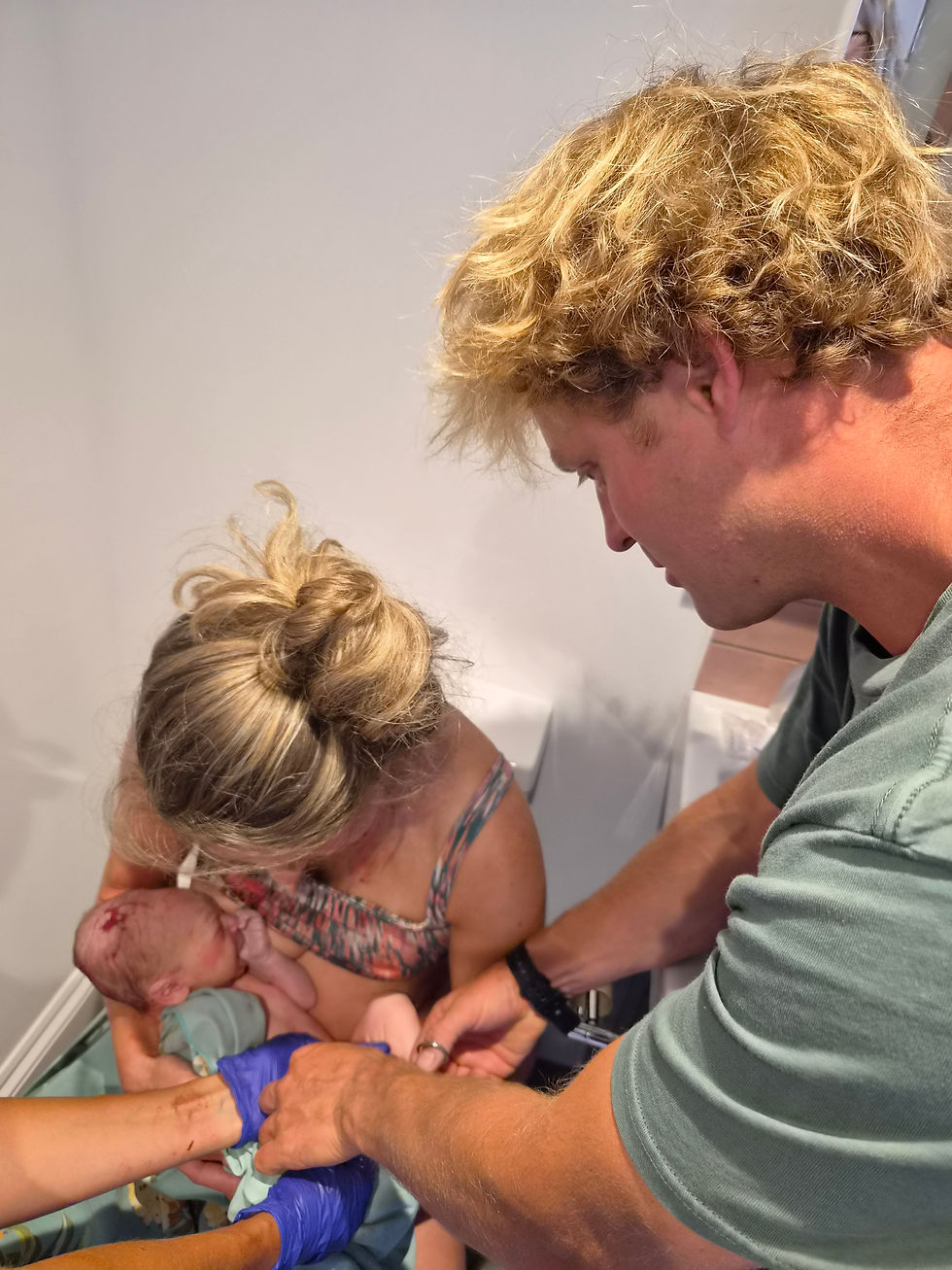
Chris - who, before labour, had insisted he definitely wasn’t going anywhere near “that end” and didn’t even want to cut the cord - was suddenly at the business end, ready to catch his own son.
Terri greeted the paramedics and gave them a rundown. Gary, the paramedic, took one look and said: “You seem like you’re doing great. Carry on.” He got all his equipment ready and simply reassured us with his presence.
A short while later, the community midwife, Emma, arrived. I remember seeing her pulling on her gloves just after our baby’s head was born. Two surges later, she and Chris caught our beautiful little boy together and gently placed him straight onto my chest.
Afterwards, I simply sat back down on the toilet, cuddling our newborn in complete shock, unable to believe what had just happened in our bathroom, while we waited for the placenta. In true home birth style, Terri fetched a colander from the kitchen to catch it!
Chris did end up cutting the cord after all.
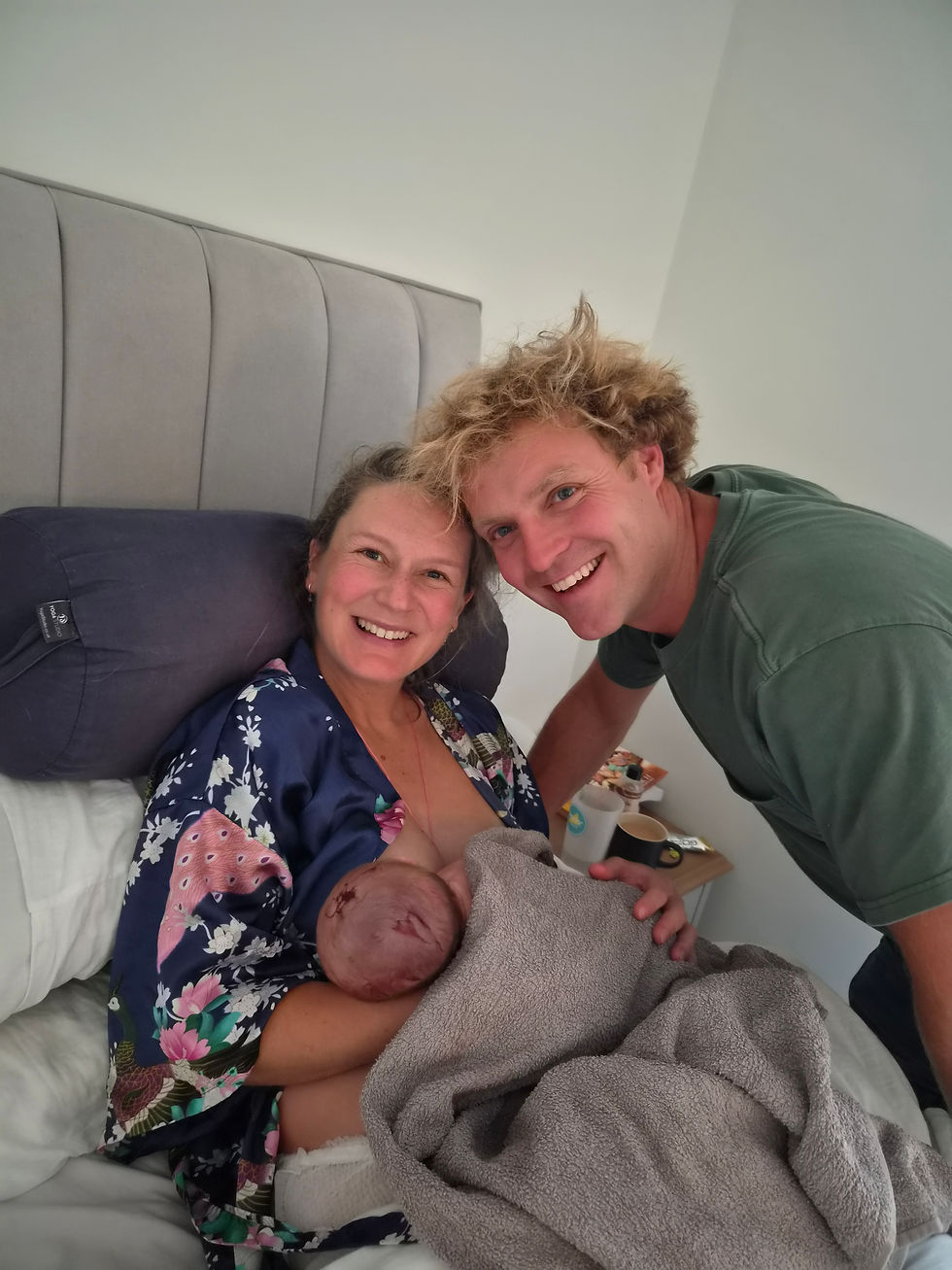
Then I walked straight into the shower (with the support of Terri), washed, climbed into bed and was handed a cup of tea by the paramedics. In less than ten minutes, I went from birthing my baby to being tucked up in bed with him feeding. It was heaven!
The midwife examined me and, incredibly, after a VBAC home birth, with no pain relief, I escaped with just a graze - no stitches required. Maybe all those weeks of perineal massage really did pay off!
I’d always said that if circumstances had been different, I’d have loved a planned home birth. But because I’d previously had a caesarean, and because we live quite a distance from the hospital, I’d decided that, for me, the increase risk of uterine rupture wasn't something I felt able to be comfortable with at home. But fate decided for us. Everything happened so much quicker than I had expected, and our baby simply arrived safely and calmly at home.
Our little boy weighed around 8 lb 2 oz and was born at 8:10pm on 22 July, which also happened to be my granny’s birthday. It feels incredibly special that they now share that date forever. Looking back, it still feels unbelievable.